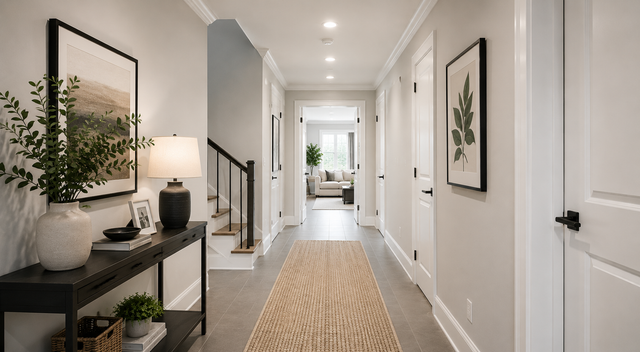
Hallway Painting in Toronto — The Most Technically Demanding Interior Surface
Hallways look like simple painting jobs until you understand what makes them difficult. A long, narrow hallway with surfaces visible from one end to the other reveals every roller mark, every lap line, every inconsistency in sheen that a larger room would absorb and hide. Painting a hallway that looks flawless requires maintaining a wet edge throughout each section and using a rolling technique specifically suited to narrow, constrained spaces.
Hallways also take more physical abuse than any other interior surface — bags dragged along them, coats brushed against them, children running their hands along the walls, scuff marks from moving furniture. The paint finish in a hallway needs to be both technically excellent and durable enough to withstand this daily contact.
Our Process — Step by Step
Step 1: Surface Assessment — We evaluate the existing hallway condition — scuffs, marks, previous patch repairs, any sheen inconsistencies — and determine what preparation is required.
Step 2: Preparation — All wall surfaces cleaned, patches filled and sanded smooth, any glossy areas lightly sanded for adhesion. Floor runner and any fixtures masked.
Step 3: Priming — Repaired areas and any significant colour changes are primed before the finish coat.
Step 4: Rolling Technique — Hallways are rolled in consistent sections with a wet edge maintained throughout. We use the right nap roller for the specific wall texture to avoid roller marks under raking light.
Step 5: Trim & Baseboards — All trim, baseboards, and door frames cut in cleanly in a semi-gloss or satin finish for durability.
What's Included in Every Job
- Two coats premium paint — scrubbable, durable finish
- All trim and baseboards
- Door frames in hallway
- Minor repairs included
- Floor protection throughout
- Full cleanup
Why Toronto Homeowners Choose Cornerstone Pro Painting
We recommend a scrubbable eggshell or satin finish for hallway walls — durable enough to wipe clean after marks and scuffs, but not so reflective that every imperfection is highlighted. This is a different product specification than we use in bedrooms and living rooms, and it reflects the specific demands of the hallway environment. Our painters understand these distinctions and apply them on every project.
Frequently Asked Questions
What finish is best for hallway walls?
Satin or washable eggshell. Hallways need a scrubbable surface that can be cleaned when marks appear, which flat paint cannot provide. Semi-gloss on trim and baseboards for maximum durability.
How long does hallway painting take?
A standard hallway and landing takes one day. Larger homes with multiple hallways and landings may take one and a half to two days.
Can you fix the scuffs and marks before painting?
Yes. Minor surface repairs — scuffs, small holes, marks that have affected the surface — are included in our standard preparation process.
What colour works well in a hallway?
Hallways often have limited natural light, which means warmer neutrals tend to work better than cool greys. A warm white, soft greige, or sage green creates a welcoming corridor that doesn't feel dark or washed out. We discuss specific options during the estimate.
What does hallway painting cost in Toronto?
A standard hallway runs $400–$800 depending on length and ceiling height. Homes with multiple hallways and landings are quoted as a combined scope. Written quote after walkthrough.
Do you paint the ceiling in the hallway?
Yes. Hallway ceilings are included in the scope and are always painted in our residential projects — a fresh ceiling makes the whole hallway feel clean and complete.
Other Services